The Donner EM1 review centers on a practical question: does a compact, rechargeable belt-pack amp suit your personal monitoring setup?
Its XLR and TRS inputs, stereo/mono switch, and 3.5 mm headphone output make it a focused option for musicians who want a portable listening point.
Donner EM1 Review Summary
The quick verdict
800+ ratings
Read Amazon ReviewsDonner EM1
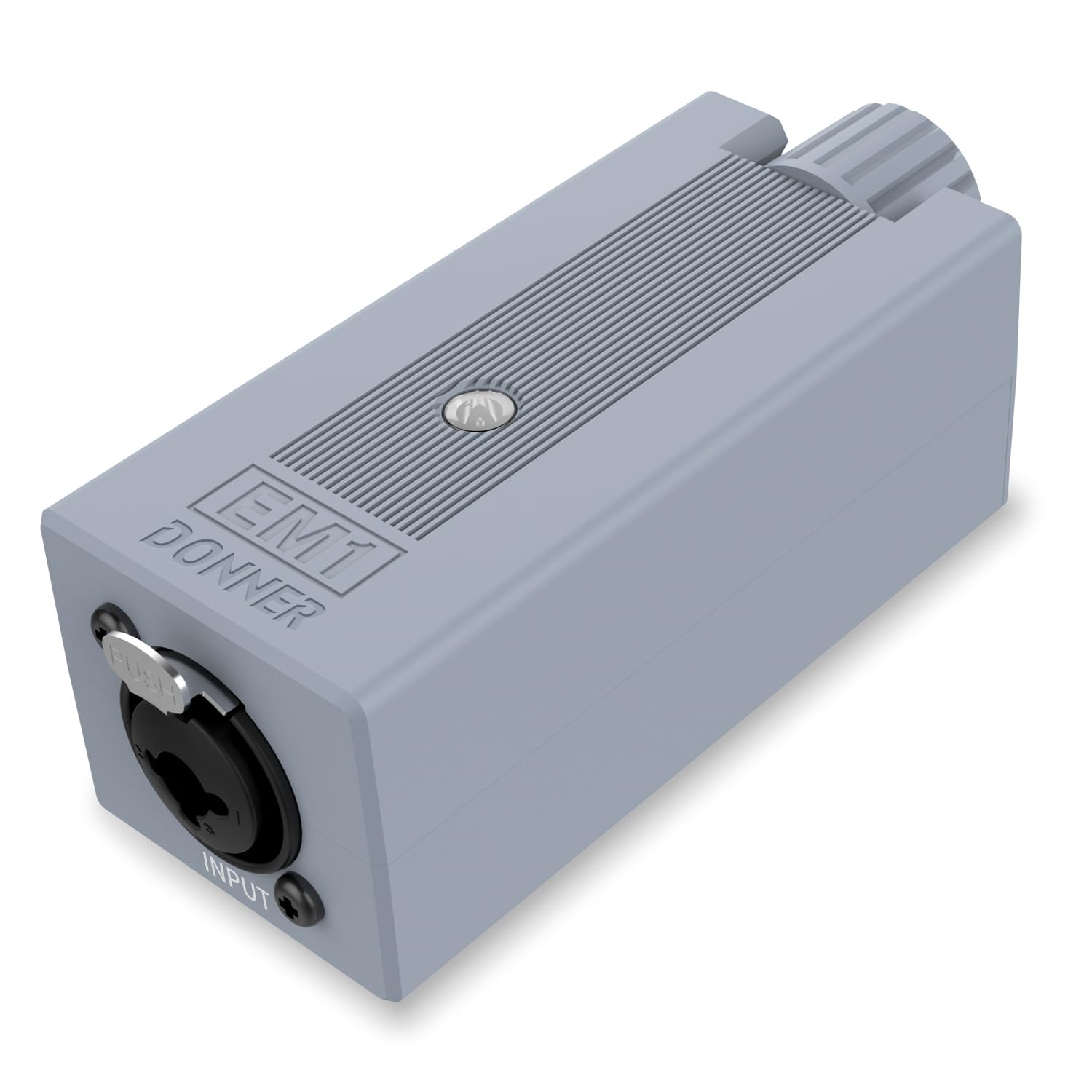
A compact, rechargeable personal monitor amp for musicians who need a belt-pack headphone solution with XLR or TRS input.
- Portable personal in-ear monitor amplifier with a 3.5 mm headphone output.
- XLR and TRS input connectors with a locking mechanism.
- Stereo/mono source switch for choosing a mode based on the cable connection.
- Rechargeable lithium-ion battery rated for up to 12 hours of use.

Pros
- Compact belt-pack design makes it easier to carry than a stationary headphone amplifier.
- XLR and TRS input formats cover common connection types for a personal monitoring setup.
Consider before buying
- It does not support a microphone, limiting its role to headphone or earphone monitoring.
- The stereo/mono setting depends on the cable connection, so check that your source and cable arrangement match the mode you need.
Read the full review summary
The EM1 combines a solid metal belt clip with a rechargeable lithium-ion battery rated for up to 12 hours of use.
Input choices cover XLR and TRS connections, while a switch lets you select stereo or mono according to the source connection.
That gives the unit a clear role in a personal in-ear monitoring setup without adding a large desktop amplifier.
It may suit performers or other musicians who want to monitor through headphones or earphones and need a compact unit they can carry on a belt.
The design is less suitable for anyone expecting a microphone preamp: microphone support is explicitly excluded. Before buying, check that your source, cable connection, and headphones fit the EM1’s stated interface and monitoring role.
The buying factors
Donner EM1 Scorecard
Editorial scores reflect listed features and buyer fit; they are not laboratory measurements or customer ratings.
Portability
A compact design and solid metal belt-pack clip support carrying the amplifier during a setup.
Input flexibility
XLR and TRS inputs provide two connection formats, with a locking mechanism on the input connector.
Monitoring controls
A stereo/mono switch accommodates either mode depending on the cable connection.
Battery convenience
The rechargeable lithium-ion battery is rated for up to 12 hours, and LED indicators cover power and charging.
Microphone capability
The product is specified not to support a microphone, so it does not fit buyers seeking a microphone amplifier.
Headphone matching
It is described as suitable for high-impedance professional headphones, though buyers should confirm compatibility with their specific headphones.
Key Features and Specifications of Donner EM1
- Portable personal in-ear monitor amplifier with a 3.5 mm headphone output.
- XLR and TRS input connectors with a locking mechanism.
- Stereo/mono source switch for choosing a mode based on the cable connection.
- Rechargeable lithium-ion battery rated for up to 12 hours of use.
- LED indicators for power and battery charging control.
- Solid metallic belt-pack clip and compact form for carrying.
- Designed with high-impedance professional headphones in mind; microphone support is excluded.
Pros and Cons of Donner EM1
Pros
- Compact belt-pack design makes it easier to carry than a stationary headphone amplifier.
- XLR and TRS input formats cover common connection types for a personal monitoring setup.
- Stereo/mono switching gives some flexibility for different source connections.
- Rechargeable battery offers up to 12 hours of use, with LED power and charging indicators.
Consider before buying
- It does not support a microphone, limiting its role to headphone or earphone monitoring.
- The stereo/mono setting depends on the cable connection, so check that your source and cable arrangement match the mode you need.
- The stated headphone focus is on high-impedance professional models; confirm compatibility with your particular headphones before choosing it.
Who Should Buy Donner EM1?
Good fit
Consider the EM1 if you need a portable personal monitor amplifier with a belt clip and want to connect through XLR or TRS.
Its stereo/mono switch and 3.5 mm headphone output give the setup a clear monitoring path, while the rechargeable battery can reduce dependence on a nearby outlet during use.
It is a reasonable fit for musicians who value a compact unit and can match their source connection, cable, and headphones to the stated inputs and output.
The up-to-12-hour battery rating may be useful for longer sessions, though actual runtime will depend on use.
Who should skip it
Skip it if you need a microphone amplifier or want to use the unit to connect a microphone; microphone support is explicitly excluded.
Look elsewhere if your setup requires a different input or headphone connection, or if you cannot confirm that your headphones suit this amplifier’s intended high-impedance use.
Donner EM1 Review: How Its Portable Monitoring Design Fits
A belt-pack format for personal monitoring
The EM1 is designed to be carried, with a compact form and a solid metal belt-pack clip. That arrangement can keep a headphone amplifier close to the performer in a personal monitoring setup.
Buyers should think through where the unit will sit and how the input and headphone cables will route before settling on it.
Choose the input and monitoring mode around your setup
XLR and TRS input connectors give the EM1 two connection formats, and the input connector includes a locking mechanism.
The stereo/mono switch is tied to the cable connection, so the best fit depends on the source and cable arrangement rather than on the switch alone. Check those details against your existing equipment before purchase.
Battery life and headphone matching
The rechargeable lithium-ion battery is rated for up to 12 hours, with LED indicators for power and charging.
The amplifier is described as suited to high-impedance professional headphones; that is a useful design cue, but buyers should verify compatibility with their own headphones and listening needs.
Alternatives to Donner EM1
No alternative model is recommended here. Compare the design and features that matter to your routine before choosing another option.
Is Donner EM1 Worth It?
The Donner EM1 is worth considering if you need a portable, rechargeable personal monitor amplifier with XLR or TRS input, a stereo/mono switch, and a 3.5 mm headphone output.
Its compact belt-pack design and up-to-12-hour battery rating suit buyers prioritizing mobility.
Confirm that your source, cable connection, and headphones fit its intended use before buying, and choose another type of amplifier if microphone support is essential.
For a straightforward personal monitoring setup that matches those constraints, the EM1 has a focused and useful feature set.
Your review at a glance
800+ ratings
Read Amazon ReviewsDonner EM1
A compact, rechargeable personal monitor amp for musicians who need a belt-pack headphone solution with XLR or TRS input.
- Portable personal in-ear monitor amplifier with a 3.5 mm headphone output.
- XLR and TRS input connectors with a locking mechanism.
- Stereo/mono source switch for choosing a mode based on the cable connection.
- Rechargeable lithium-ion battery rated for up to 12 hours of use.